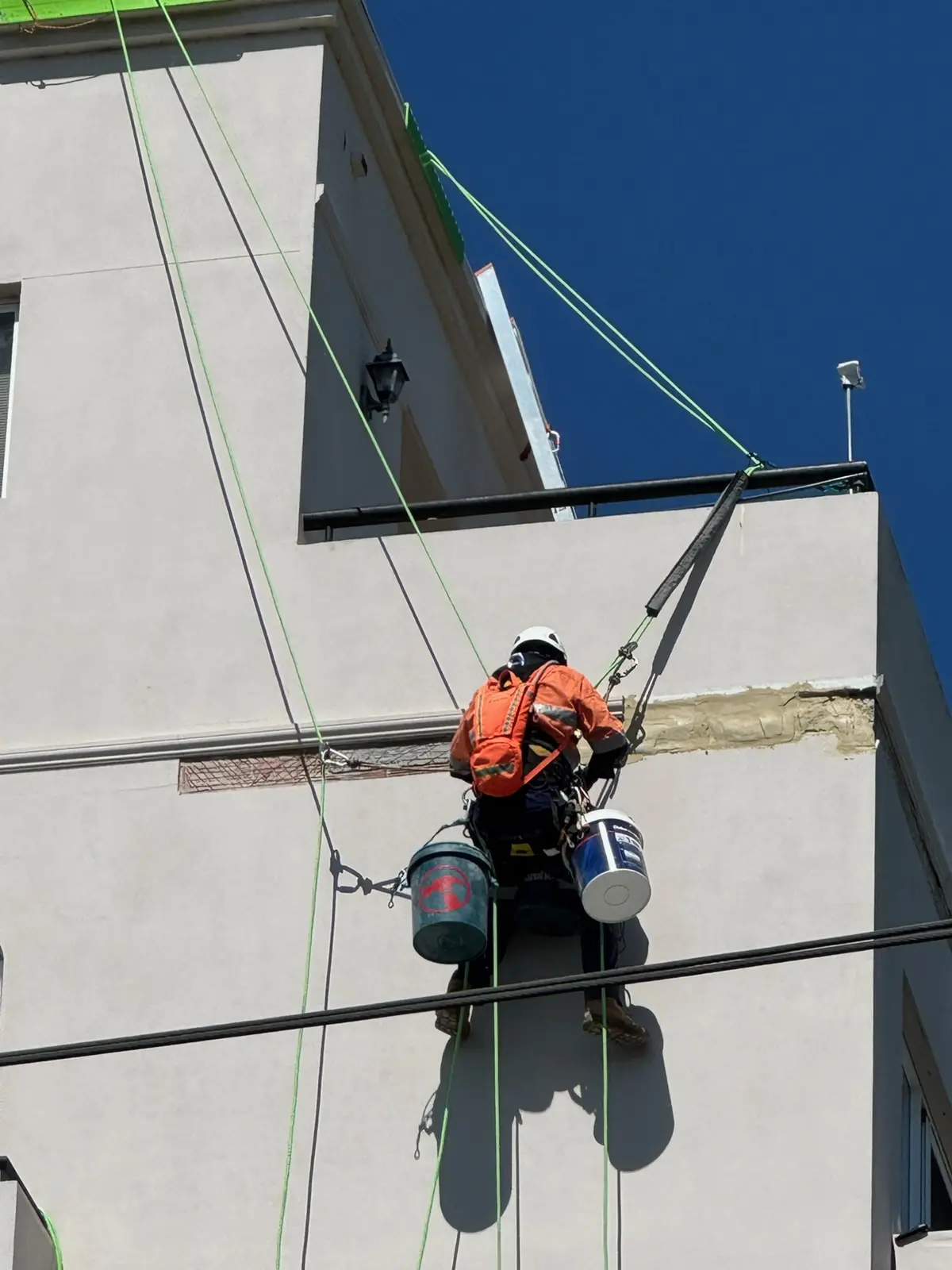
When a high rise building needs painting, repairs, washing or window cleaning, the first question is usually how to reach the work. The two main options are scaffolding and rope access. Scaffolding builds a platform up the outside of the building. Rope access sends trained technicians down the face of the building on two independent ropes, working from certified roof anchors.
Neither is right for every job. This guide compares rope access vs scaffolding on the things building and strata managers care about most: cost, time on site, disruption to residents and safety, so you can work out which one suits your building.
Scaffolding and rope access both get people safely to the outside of a building, but they get there in very different ways. That changes the cost, the timeline and the impact on the people who live and work in the building.
With scaffolding, a large part of the cost is the access itself, before any painting or repairs start. The scaffold has to be delivered, erected, inspected, hired for the length of the job and then dismantled and taken away. On a tall building that is a lot of material, and if the scaffold sits over a footpath or road you may also need a permit from the local council.
With rope access, the access equipment is the crew’s own ropes, harnesses and gear, and it goes up and comes down each day. More of what you pay goes into the work itself. That is why rope access is often the more cost-effective option for repairs, repaints, washing and maintenance on high rise buildings, especially when the work is spread across the facade rather than in one spot.
A scaffold has to go up before the real work starts and come down before the job is finished, and on a high rise that adds time at both ends. Rope access crews can start as soon as the roof anchors are confirmed in date, and they move from drop to drop as the work progresses. For small repairs or a single elevation, that difference is often the biggest saving of all.
Scaffolding wraps the building for the length of the job. Balconies can be closed off, windows covered, light reduced and footpaths narrowed, and a scaffold is also a structure people could climb. Rope access leaves almost nothing behind at the end of each day. Residents keep their balconies, the building looks normal from the street and there are no road closures. Work overhead is planned so the areas below are kept clear while the crew is working.
Rope access is not the answer to everything. Scaffolding can make more sense when:
A good contractor will tell you honestly which method suits your building, even when the answer is scaffold.
Both methods are covered by work health and safety laws. Scaffolding work where a person or object could fall more than 4 metres has to be done by licensed scaffolders, and Safe Work Australia’s guide to scaffolds and scaffolding sets out what is involved. Rope access relies on certified roof anchors and trained technicians working on two independent ropes, and the anchors themselves must be inspected regularly. Read more in our guide to anchor point certification in WA.
For most maintenance on Perth apartment, strata and office buildings, such as high rise painting, facade and concrete repairs, building washing and high rise window cleaning, rope access is usually quicker to start, less disruptive and better value. If you are not sure, we can look at the building and tell you which access method makes sense, and if that is scaffold, we will say so. See the areas we service across Perth and WA.

Years of Experience
Quality Workmanship
Crew, Whole Job
Google Rated
Often, for maintenance work, because there is no scaffold to hire, erect and dismantle and no permit for scaffolding over a footpath. The final cost depends on the building and the job, so the honest answer is to have both options looked at for your building.
When it is planned and carried out properly, yes. Rope access technicians work on two independent ropes from certified roof anchors, and every job is planned before anyone goes over the edge. Both methods are covered by work health and safety laws.
Most exterior maintenance on high rise buildings, including painting, concrete cancer and crack repairs, caulking and window water testing, building washing, window cleaning, anchor testing and general repairs at height.
No. With rope access the building stays in use, residents keep their balconies and there is no scaffold wrapped around the building. We keep you informed so residents know when we will be working near their windows.
Anchors must be tested and in date before rope access work starts. We carry our own anchor test equipment, so we can test them on the day and keep the job moving.
For major structural work, a full facade replacement, jobs that need heavy materials stored at height, or buildings without suitable anchors, scaffolding can be the better option. We will tell you if that is the case for your building.