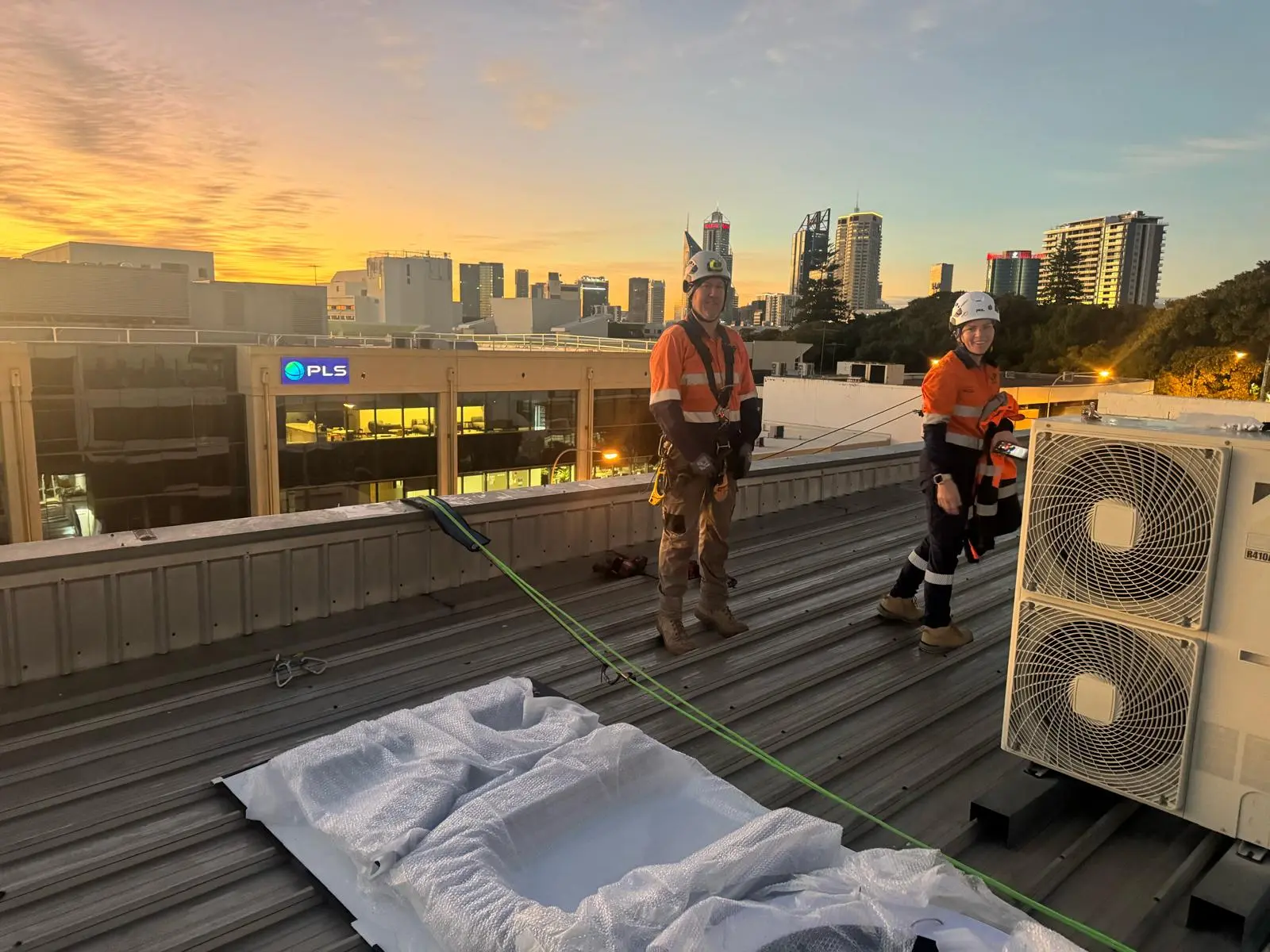
Anchor point certification is the inspection that confirms the roof anchors on your building are in good condition and safe to use. Roof anchors are the fixed points on the roof or structure that workers attach their ropes and harnesses to. Every high rise window clean, building wash, repaint or facade repair done by rope access starts from them.
If the anchors are out of date, damaged or undocumented, work at height cannot safely start. A certification inspection usually looks at:
For building and strata managers, anchors are easy to forget until a contractor arrives and cannot use them. Keeping them inspected and documented avoids delays and keeps everyone working at height on your building safe.
The Australian and New Zealand Standard for the selection, use and maintenance of fall-arrest systems, AS/NZS 1891.4, sets out periodic inspection of anchors, and the long-standing practice across Australia is to have roof anchors inspected and certified by a competent person at least every 12 months. Anchors that are used often, or that sit in harsh conditions such as salt air on coastal buildings, may need checking more often.
In Western Australia, the duty to manage the risk of falls sits with the people who control the workplace, and WorkSafe WA’s code of practice on managing the risk of falls is the practical guide to what that involves.
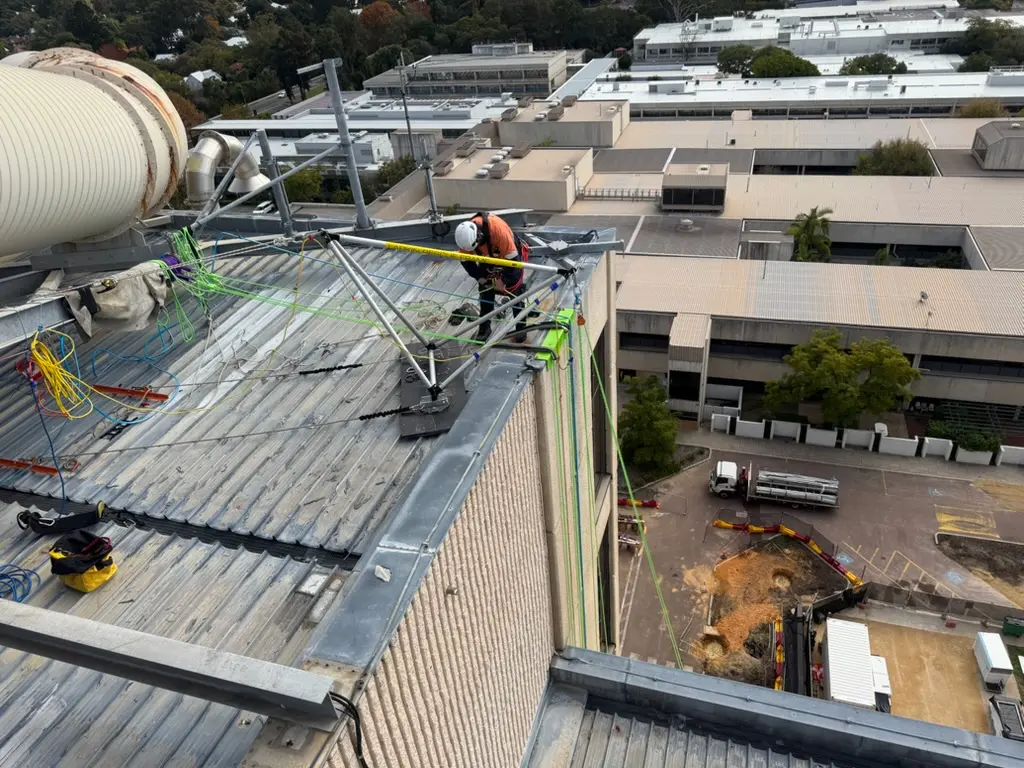
Most anchors are checked by a close visual and hands-on inspection of the anchor, its fixings and the surrounding structure. Some anchor types, such as glue-in and friction anchors, are also load tested. Anchors that pass are tagged with the inspection date, and anchors that fail are tagged out of service and must not be used until they are repaired or replaced.
Out of date anchors are one of the most common reasons high rise maintenance gets delayed. Window cleaning, washing, painting and repairs by rope access all depend on anchors that are in date. Up2 Rope Access carries its own anchor testing equipment, so in most cases we can test anchors on the day and then get on with the job, rather than waiting on a separate contractor.
Up2 Rope Access tests and certifies existing roof anchors as part of our roof anchor testing by rope access. We do not install height safety systems such as new anchors, walkways, handrails or ladders. If an anchor fails or more anchors are needed, that work goes to a specialist height safety installer.
The easiest way to keep anchors in date is to test them at the start of the work you already have planned. A building wash, high rise window cleaning or a rope access repaint all begin with an anchor check, so one visit covers both. We work across Perth metro and WA; see the areas we service.

Years of Experience
Quality Workmanship
Crew, Whole Job
Google Rated
The common practice across Australia, based on AS/NZS 1891.4, is inspection and certification by a competent person at least every 12 months, and more often where anchors are used heavily or exposed to harsh conditions such as salt air.
A competent person with the training and test equipment to inspect the anchors and, where needed, load test them. Results are recorded and each anchor is tagged with its inspection date.
Inspection is a close check of the anchor, its fixings and the structure around it. Load testing applies a controlled load to confirm the anchor holds, and is needed for some anchor types such as glue-in and friction anchors.
Usually, yes. We carry our own anchor testing equipment, so out of date anchors can normally be tested before the window cleaning, washing or painting starts.
No. We test and certify existing anchors only. New anchors, walkways, handrails and ladders are installed by specialist height safety companies.
It is tagged out of service and must not be used until it is repaired or replaced. We let you know which anchors failed so you can arrange the repair before rope work goes ahead from them.