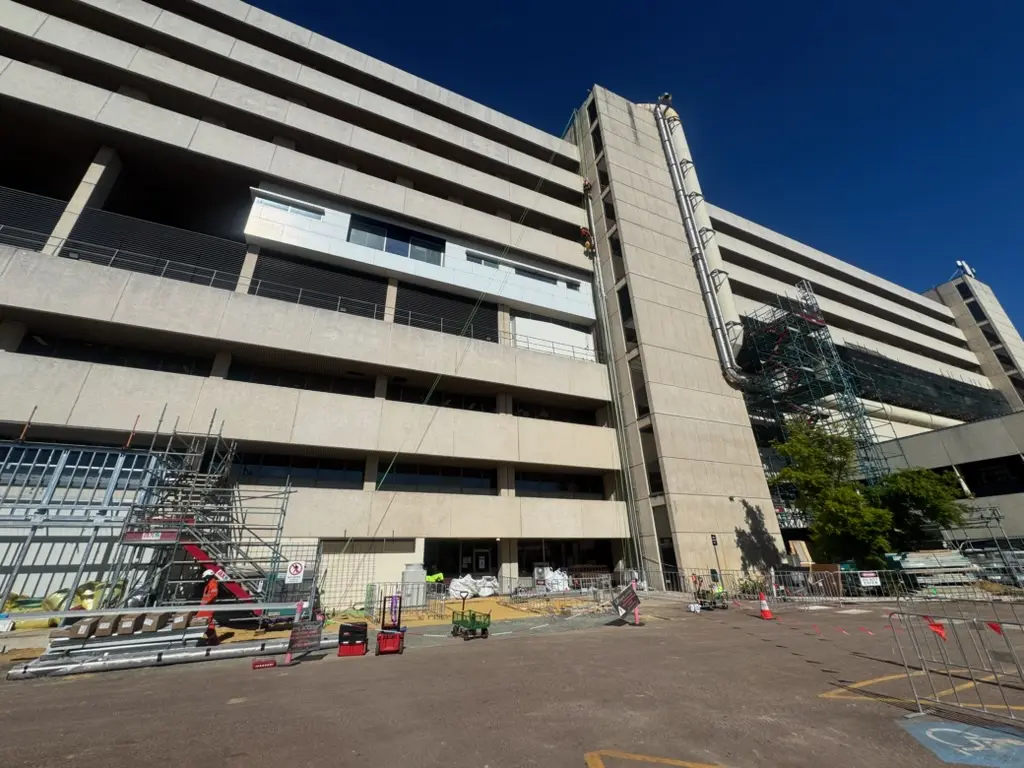
Concrete cancer is the name for damage caused when the steel reinforcement inside concrete starts to rust. Rust takes up far more space than the steel it replaces, so as it grows it pushes outwards, cracks the concrete and eventually breaks pieces away. On a high rise building it shows up first where concrete is most exposed to water and weather: balcony slabs and edges, slab edges between floors, columns, planter boxes and concrete facade panels.
Because the damage starts inside the concrete, it is often well advanced by the time it can be seen from the ground. These are the signs to look for on your building:
Concrete cancer on a high rise is rarely one problem. It is usually water getting in where it should not, over many years, and it gets bigger and dearer to fix the longer it is left.
On a house, concrete cancer is a repair job. On a high rise it is also a safety issue, because loose concrete on balconies and slab edges can fall onto people, cars and property below. Damage also spreads along the steel, so a few small patches today can become a long run of slab edge in a few years. Finding it early, before it breaks through, keeps the repair smaller and the building safer.
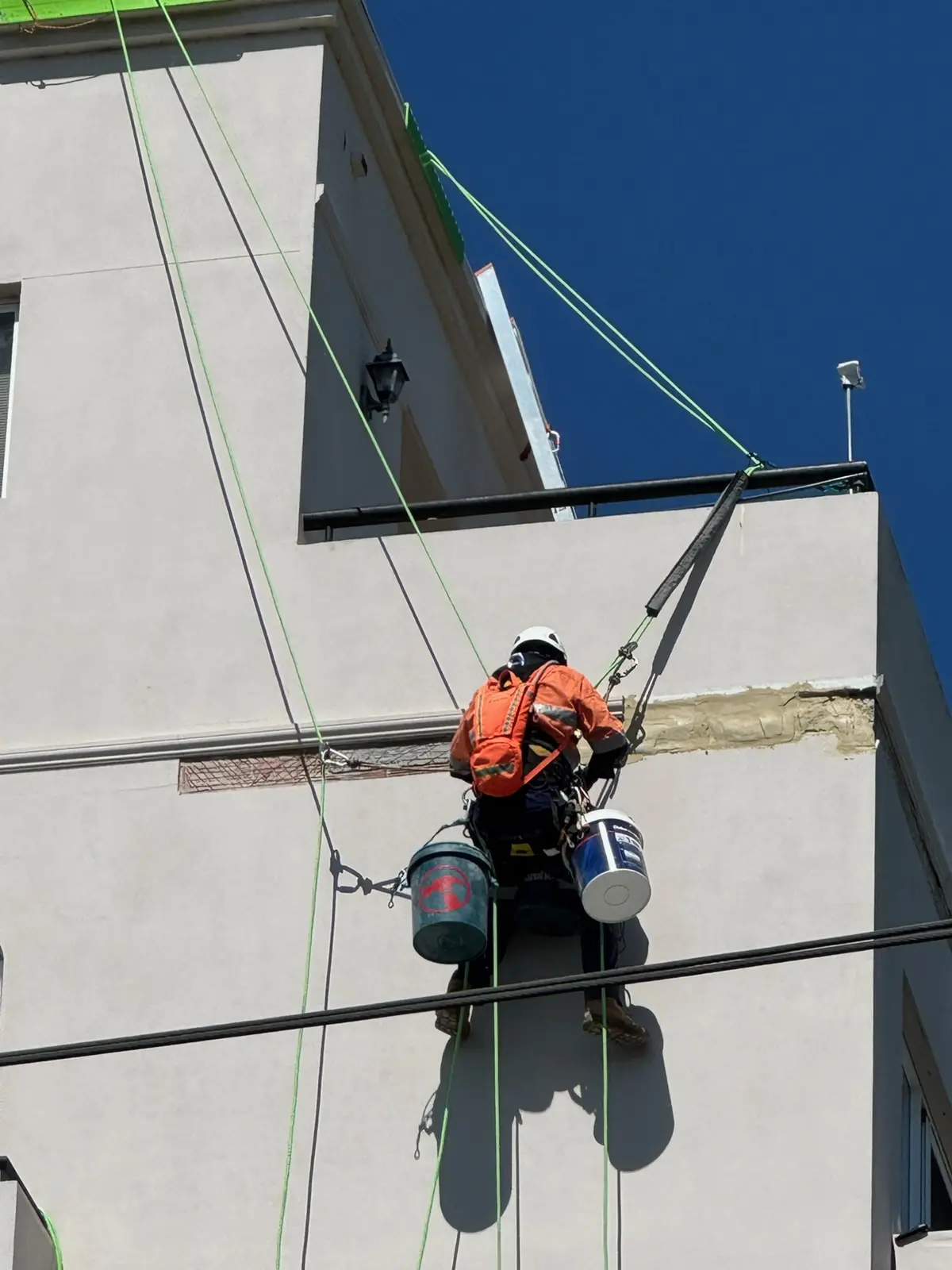
Most concrete cancer on a high rise is on balcony and slab edges that are hard to reach. With rope access facade repairs the crew works down the face of the building from balcony to balcony, so there is no scaffold around the building, residents keep using their balconies and car parks, and the same crew can repaint the building by rope access once the repairs are done.
Every building is different, so the honest answer is that it depends on what is found once the facade is inspected up close. The main things that drive the cost are:
On a high rise, scaffold hire can be a large part of the cost of a repair. Rope access removes it, which is why it is often the most practical way to fix concrete cancer on apartment and strata buildings. Up2 Rope Access works across Perth metro and WA, including Fremantle, East Perth and South Perth, and our roof anchors are tested before any rope work begins.
Years of Experience
Quality Workmanship
Crew, Whole Job
Google Rated
It can be. As it spreads, pieces of concrete can loosen and fall from balconies and slab edges onto people, cars and property below. If you can see cracking, rust staining or spalling, have the building looked at early.
Yes. Rope access lets a crew work down the face of the building and repair balcony and slab edges directly, with no scaffold built around the building.
No. Paint hides the damage for a while, but the steel keeps rusting underneath and the cracks come back. The damaged concrete has to be removed, the steel treated and the area rebuilt before it is painted.
A proper repair that removes the damaged concrete, treats the steel and seals the surface should last for many years, as long as the water that caused it is also stopped, for example by re-sealing cracks, joints and balcony edges.
Yes. We are a registered painting company (licence PC 102093), so the same crew can repaint by rope access once the repairs are finished.
Up2 Rope Access is based at 418 Murray St, Perth, and works on high rise and strata buildings across Perth metro and WA. See the areas we service.