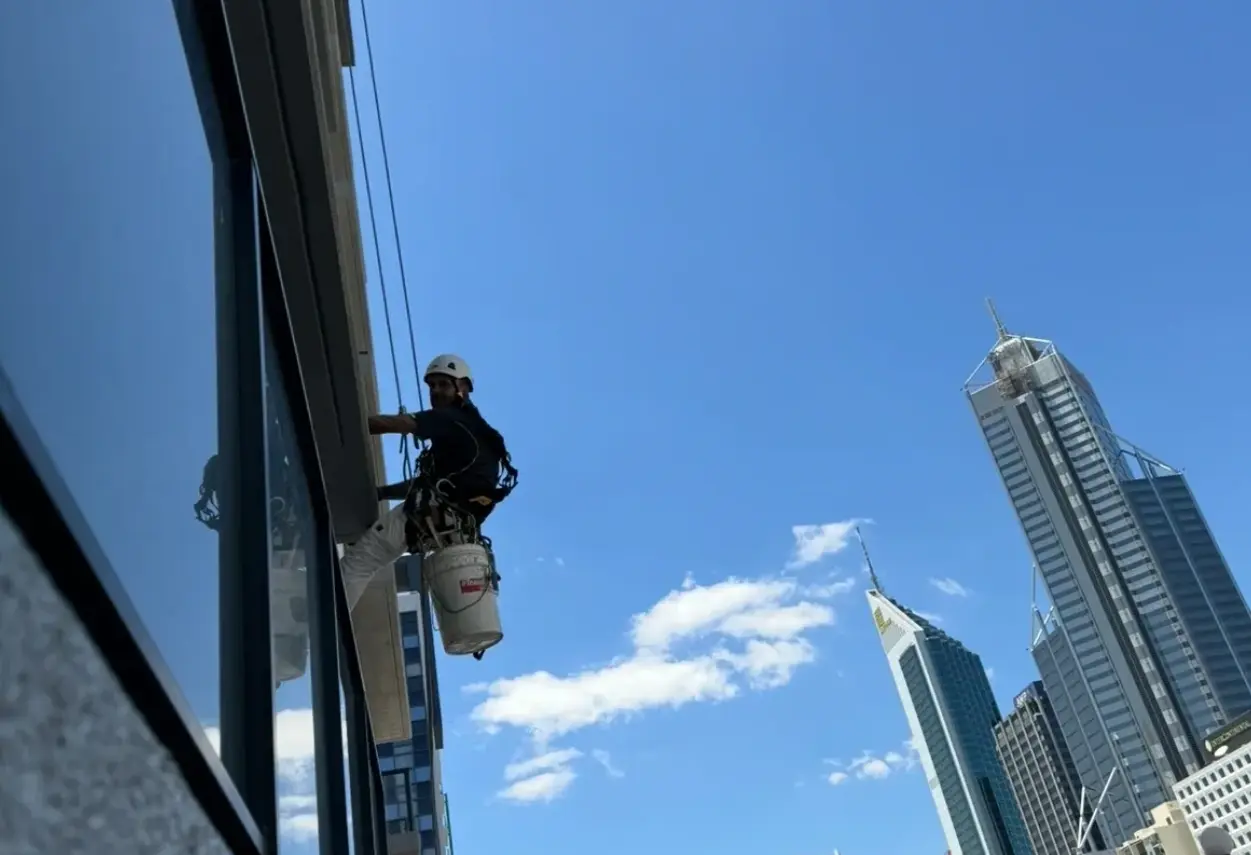
Window water testing is a controlled way of finding out whether a window, its frame or the seal around it is letting water into a building. For strata managers and building owners dealing with damp carpets, stained ceilings or water tracking down an inside wall, it turns guesswork into evidence.
On a high rise, the test is done from the outside at height while someone watches for water inside. Common signs that a window needs testing:
Many leak tests are done with a garden hose. That can show water getting in, but it does not tell you how much water, at what pressure or for how long, so the result is hard to repeat and hard to rely on when a builder, window supplier or strata committee is deciding who fixes what.
In Australia, windows and external glazed doors are covered by AS 2047, which sets requirements including water penetration resistance, with the test methods in the AS/NZS 4420 series. Building and Energy WA explains how these standards apply in its industry bulletin on weatherproofing windows and doors. Those tests are done on window products in a laboratory. Once a window is installed, a site water test checks whether the installed window, and the seal between it and the building, are actually keeping water out.
A proper site test uses a calibrated spray nozzle held at a set distance from the window, at a set water pressure, for a set time on each section of the frame. Testing usually starts low and works upwards, one joint or section at a time, while a second person watches inside for water. Because the conditions are controlled, the same test can be repeated after repairs to prove the leak is fixed. Up2 Rope Access uses dedicated water test equipment for this work, not a garden hose.
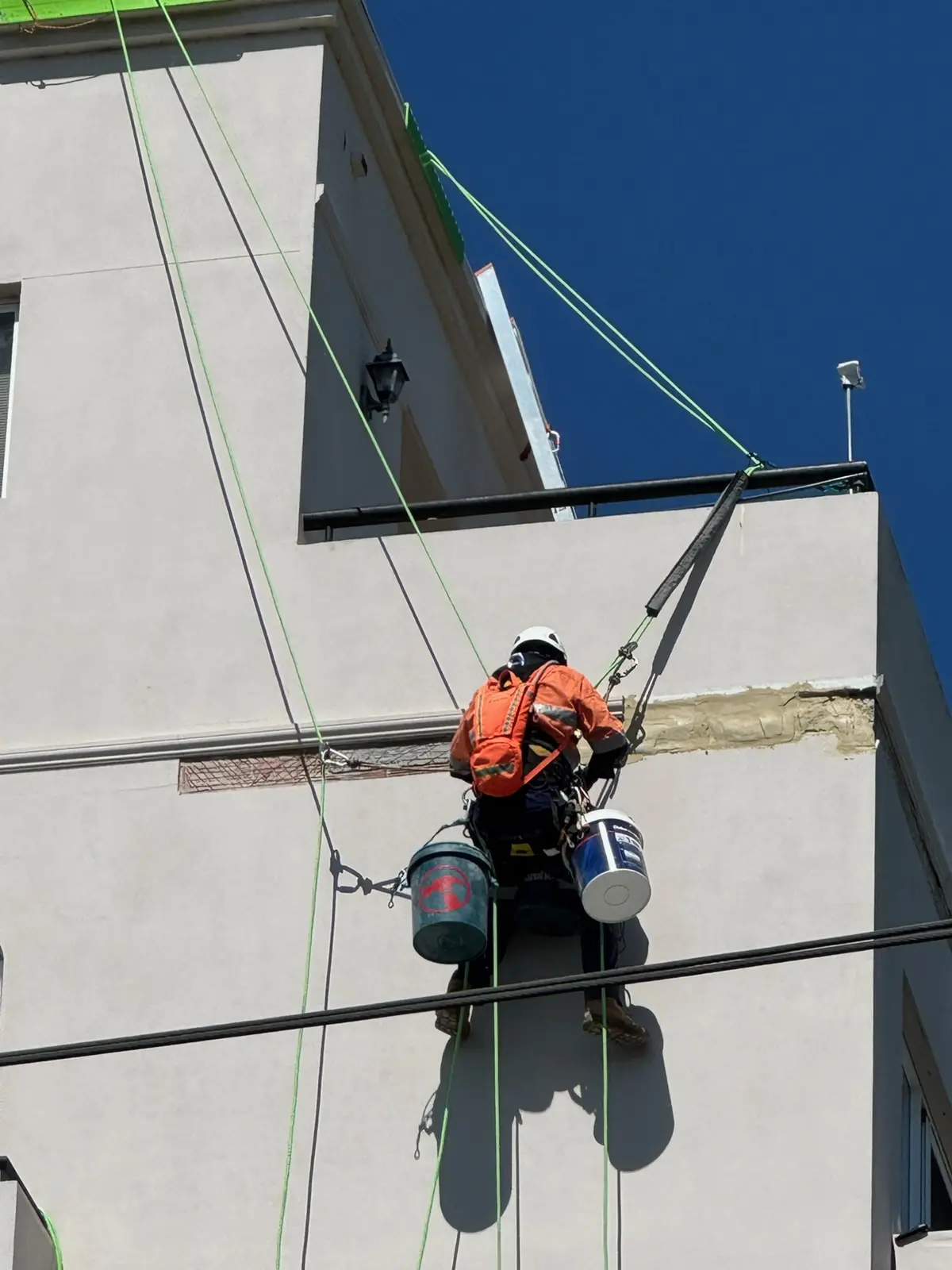
On an apartment tower, the leaking window might be ten floors up. Rope access lets the technician reach the exact window and the facade around it without scaffolding or a swing stage, and the same crew can often fix what they find while they are there: replacing failed sealant, re-caulking joints or repairing cracked concrete around the opening. Our facade maintenance page covers the repair side of the work.
Sometimes the window is not the problem at all, and water is coming through the wall, a balcony or the roof above. Testing one element at a time helps rule causes in or out before money is spent on the wrong repair.
Once the source is found, the repair is planned: resealing, re-caulking, crack repair or, if the frame itself has failed, a recommendation to have the window repaired or replaced by a glazier. The area is then tested again to confirm it is watertight. Regular high rise window cleaning visits are also a good time to spot failed sealant early.
In a strata building, responsibility depends on where the leak is coming from and what the strata plan and by-laws say about windows and the building envelope. A water test does not decide responsibility, but it gives the strata manager, the owner and any contractor clear evidence of where the water is getting in. That makes the conversation about who fixes what much easier, especially if the building is still within a builder’s defects period.
Water that gets past a window does not just damage carpet and plaster. If it reaches the reinforcing steel in the surrounding concrete, it can start the corrosion that leads to concrete cancer, which costs far more to repair than a failed bead of sealant. Our guide to concrete cancer in high rise buildings explains how that damage develops, and why finding and stopping leaks early protects the structure as well as the apartments.
Up2 Rope Access carries out window water testing and leak repairs on apartment, strata and commercial buildings across Perth, including East Perth and South Perth. Contact us to talk through a leak in your building.

Years of Experience
Quality Workmanship
Crew, Whole Job
Google Rated
A controlled test where water is sprayed onto a window and the seal around it at a set pressure, distance and duration while someone checks inside for leaks. It shows exactly where water is getting in.
A hose can show that a window leaks, but it is not controlled or repeatable. A calibrated nozzle at a set pressure and duration gives a result you can rely on, and the same test can be repeated after repairs.
AS 2047 sets the performance requirements for windows and external glazed doors, including water penetration resistance, and the AS/NZS 4420 series sets the test methods. Ask your tester which method they will follow on site.
Yes. Rope access lets us reach windows on any floor of a building with suitable roof anchors, without scaffolding or a swing stage.
Often, yes. Failed sealant, open joints and cracked concrete around the window can usually be repaired by rope access in the same visit, then tested again.
It depends on how many windows and joints need testing and how easy the leak is to find. Each section is tested in turn, so we can give you an idea of time once we know the building and the problem.