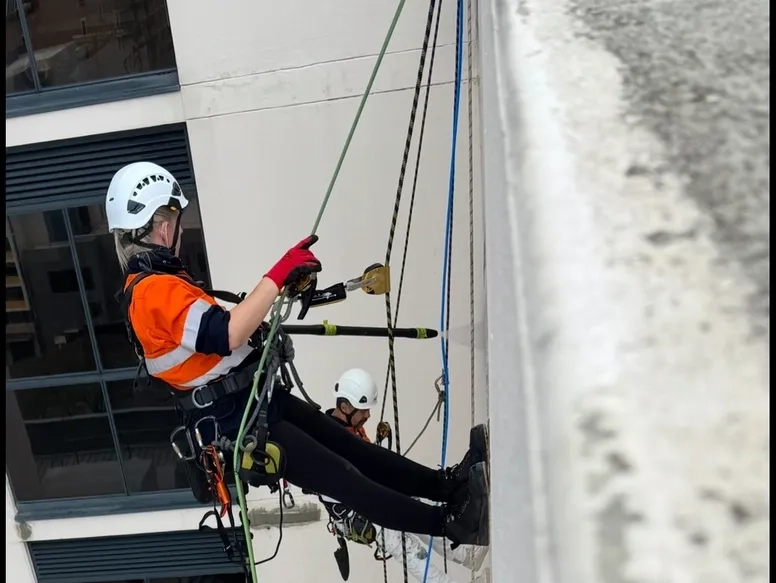
Concrete, render and masonry contain crystalline silica. When they are cut, ground, chiselled or jackhammered, as they are during concrete cancer repairs, fine respirable silica dust is released. Breathing it in over time can cause silicosis, lung cancer and other serious illness.
For building owners and strata managers, silica dust matters too, because it affects the crew, residents and anyone below. Tasks on a high rise repair that can create it include:
WorkSafe WA treats cutting, grinding, drilling and chiselling concrete and masonry as high risk processing of crystalline silica. Its frequently asked questions on silica set an exposure standard of 0.05 mg/m³ averaged over an eight-hour shift, and make it clear that uncontrolled dry cutting is not acceptable.
The best protection is to stop dust getting into the air in the first place. That means wet methods and tools with on-tool dust extraction where they can be used, and keeping the work area controlled so dust does not spread across balconies and ledges. WorkSafe WA also expects a silica risk control plan to be in place before high risk work begins.
Even with good controls, respiratory protection is still needed. Up2 Rope Access technicians doing concrete repairs wear a powered air helmet, a 3M Versaflo, rather than relying on a disposable P2 mask. A powered air respirator uses a battery-powered blower to draw air through a filter and supply it to the helmet, so the technician breathes filtered air. A loose-fitting helmet like this does not rely on a tight face seal the way a disposable mask does, and WorkSafe WA notes that tight-fitting respirators need the wearer to be clean shaven and fit tested to work properly.
On an occupied building, dust control protects residents as well as the crew. Residents are told which drop is being worked on so they can keep windows and balcony doors closed, the area below the work is controlled, and dust and debris are cleaned up rather than left on balconies and ledges.
Concrete cancer repairs are not just patching. Damaged concrete has to be cut back to sound material, the corroded steel treated and the area rebuilt, and much of that creates dust. When you compare quotes, ask each contractor how they will control silica dust and what respiratory protection their crew will use. A crew that has invested in proper equipment is likely to take the rest of the job seriously too.
Dust that escapes the work area settles on balconies, window ledges, outdoor furniture and cars below. Once it has settled, sweeping it dry or blowing it away puts it straight back into the air, which is why WorkSafe WA lists sweeping and blowing settled dust as a source of exposure. Cleaning up with wet methods or a suitable vacuum, and controlling dust at the source in the first place, stops the clean-up becoming a second dust problem.
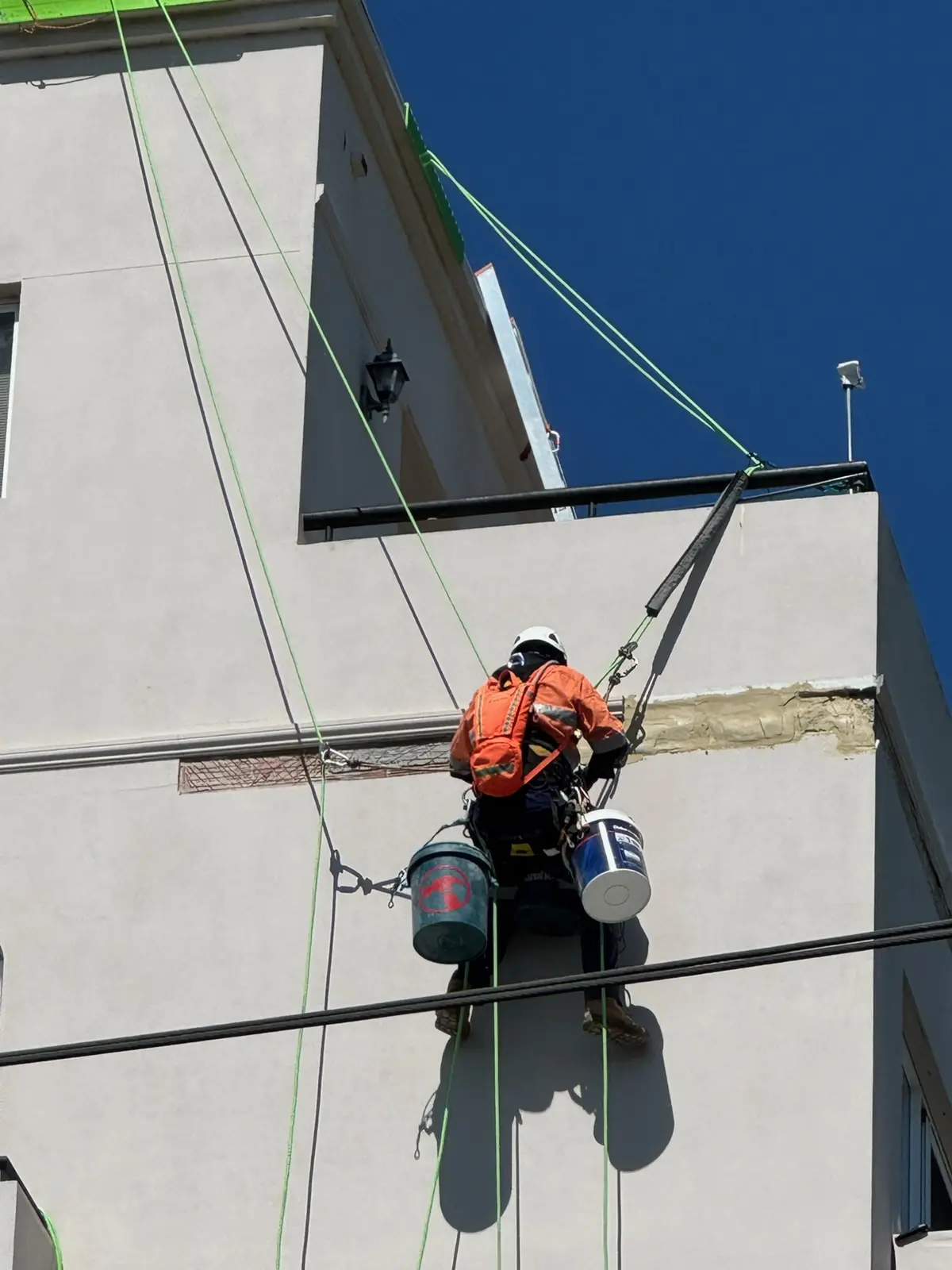
Rope access keeps the work area small and close to the repair. There is no scaffold and shade cloth wrapped around the building for weeks, and the technician works right at the damaged section, so wet methods and extraction can be used close to the source. When a repair is finished, the crew moves to the next area and the building is left clear.
For building owners, the practical point is that a professional contractor treats silica as a managed hazard, with controls planned before the job starts, rather than something dealt with on the day. It is reasonable to ask how the risk will be managed, which controls will be used on your building and how residents will be kept informed. The answers tell you a lot about how the rest of the job will be run.
Concrete is not the only source. Cutting out old sealant, grinding render, preparing surfaces for paint and abrasive blasting on steel can all create dust, and some older paints contain lead. The same approach applies to all of them: control the dust at the source, wear the right respiratory protection and leave the site clean.
Read more about concrete cancer in high rise buildings, or see our rope access concrete repairs service. We work on apartment and strata buildings across Perth, including Fremantle and South Perth.

Years of Experience
Quality Workmanship
Crew, Whole Job
Google Rated
Fine dust containing respirable crystalline silica, released when materials such as concrete, render, brick and stone are cut, ground or drilled. The particles are small enough to be breathed deep into the lungs.
Long-term exposure can cause silicosis, lung cancer and other serious diseases. WorkSafe WA sets an exposure standard of 0.05 mg/m³ averaged over an eight-hour shift.
Yes. Cutting back damaged concrete, chiselling around steel and grinding repair areas all release dust, which is why dust controls and respiratory protection are needed.
A helmet connected to a battery-powered unit that draws air through a filter and supplies clean air to the wearer. Our concrete repair technicians wear a 3M Versaflo powered air helmet.
A disposable P2 mask can protect against dust if it fits and seals properly, but it relies on that seal. For our concrete repair work we choose powered air respiratory protection, combined with dust controls at the source.
Dust is controlled at the source where possible, residents are asked to keep windows and balcony doors closed near the work, and the area is cleaned up afterwards.