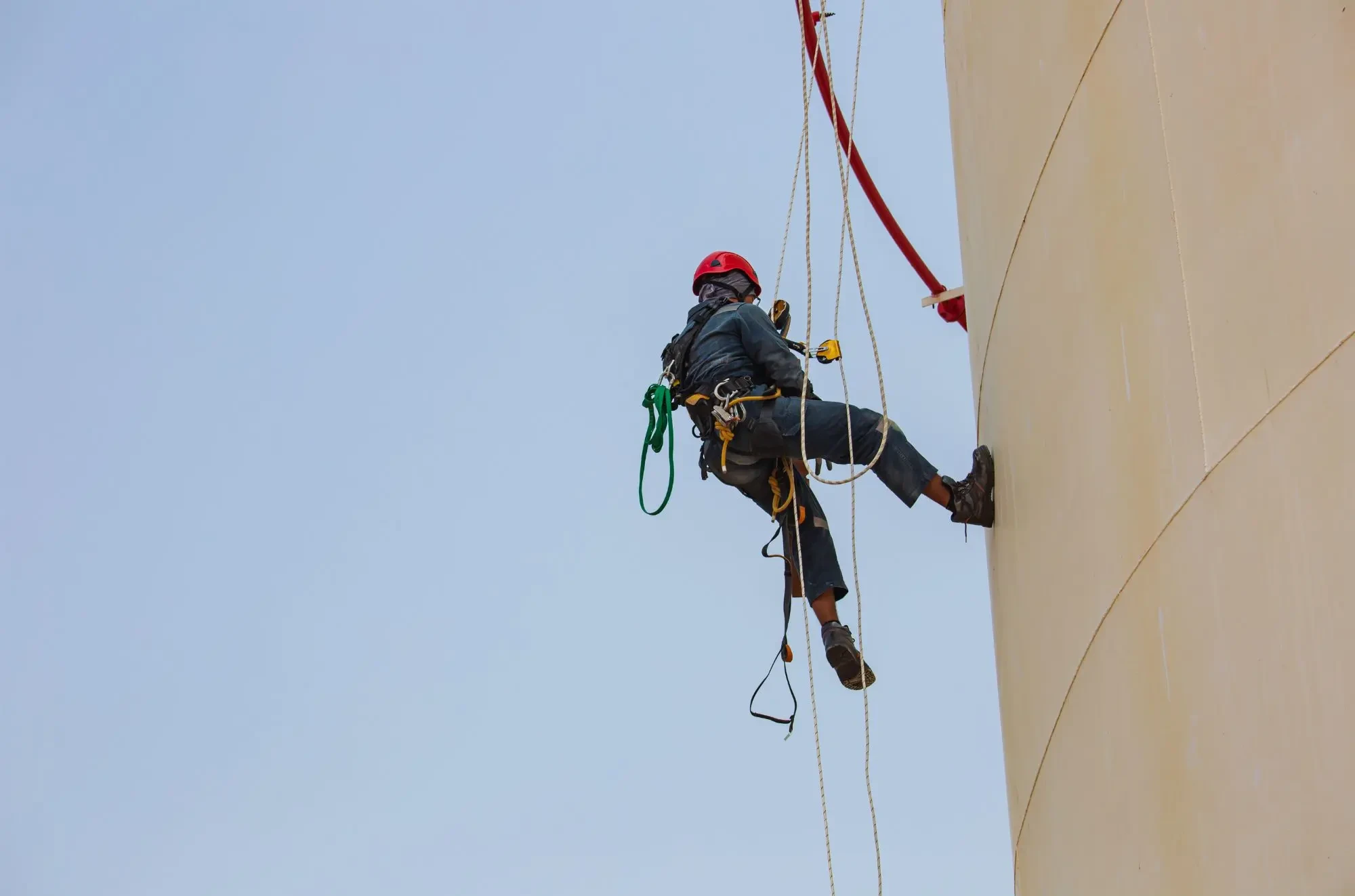
A power ascender is a motorised device that moves a rope access technician, or a load, up and down a rope. Instead of climbing by hand with mechanical ascenders, the technician lets the machine do the lifting and saves their energy for the actual work.
Up2 Rope Access uses a Skylotec ACX power ascender on its jobs. Here is what that means for a building owner or site manager:
Traditional rope access relies on the technician’s own strength to climb back up a rope. On a tall building that is tiring, and on a job that involves moving heavy materials it adds up to a lot of time and effort that is not going into the work itself.
The ACX is a battery-powered ascender made by Skylotec. According to Skylotec’s product information, it has a working load limit of 220 kg and can ascend at up to 24 metres per minute and descend at up to 25 metres per minute. It is designed to raise and lower people and to move loads to hard-to-reach places such as building facades.
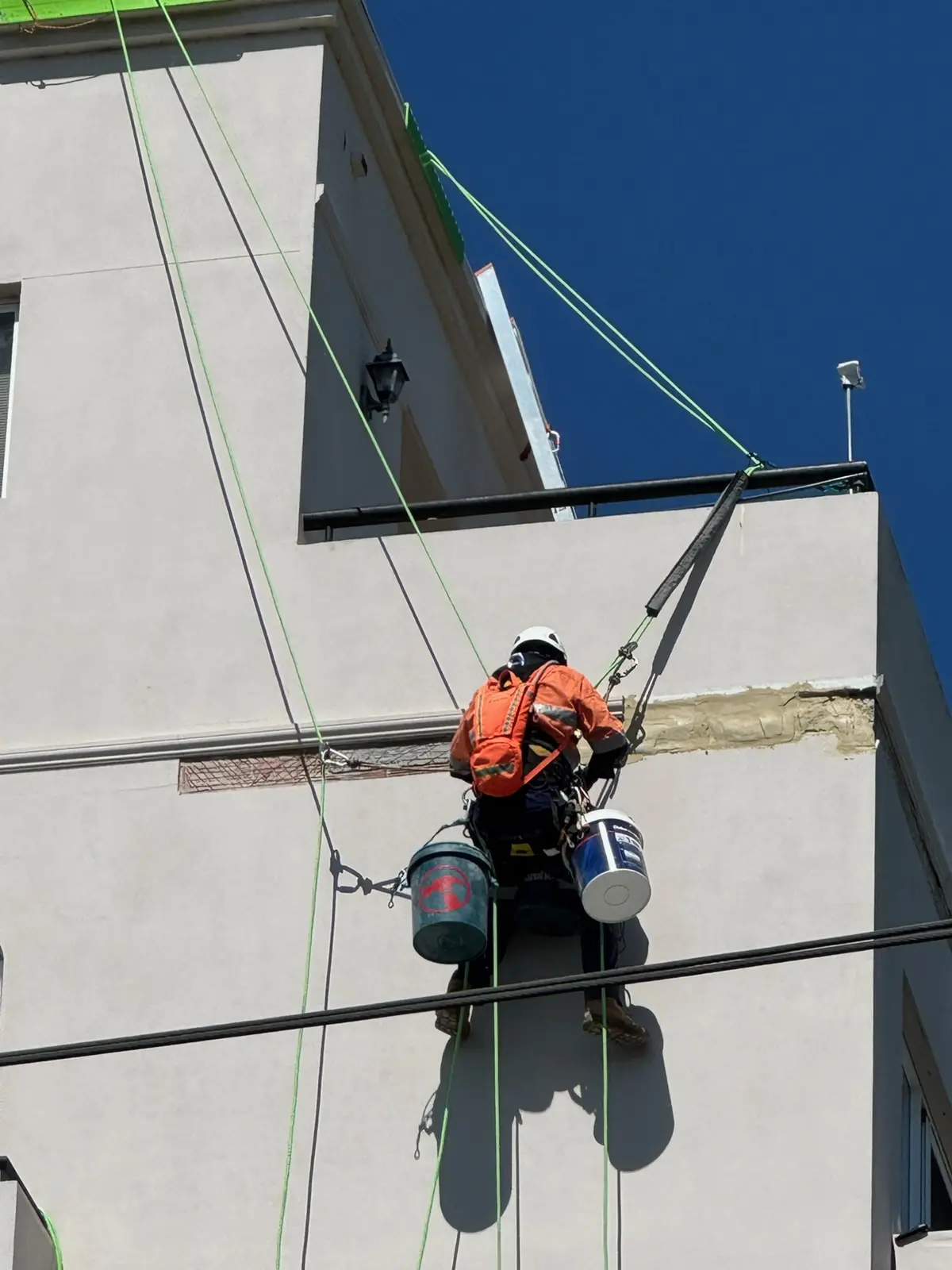
On a concrete repair job, the crew needs mixers, buckets, water, repair mortar and tools at the work area. Without a powered lift, all of that gear is often carried up through the building to the roof and lowered down from there. With a power ascender, materials can be lifted from the ground to where the technician is working. That saves time, keeps heavy gear out of lifts and stairwells, and means less manual handling.
Climbing a rope again and again is hard work. A technician who has not spent their energy hauling themselves up the building is in a better position to concentrate on careful facade repairs, rope access painting or detailed inspection work. Fatigue is a risk in any work at height, so reducing it is good for safety as well as productivity.
Rope access work is done in vertical drops. Moving between levels on a drop, or getting back to the top to reposition, is quicker with a power ascender. On a big job with many drops, that time adds up.
A power ascender does not replace the basics. The technician still works on two ropes from certified roof anchors, follows the rope access system and the safe work procedures for the job, and the anchors are tested before work starts. Safe Work Australia’s guide to managing the risks of industrial rope access systems sets out that framework.
Moving materials on a rope still needs planning. Loads have to be within the device’s limits and rigged correctly, and the area below has to be controlled so nobody walks under a load being raised or lowered. Done properly, lifting from the ground cuts down the number of times heavy items are carried through a building, which means less manual handling for the crew and less traffic through lobbies and lifts for residents.
Every rope access job needs a plan for rescuing a technician who is injured or stuck on the rope. Power ascenders are used in some rescue set-ups as well as for everyday work, and powered equipment on site can make it quicker to move a person up or down the rope in an emergency, provided the rescue plan and the crew’s training cover it.
On Perth jobs, the biggest gains come on tall apartment and office buildings where technicians would otherwise climb a long way between work areas, and on repair jobs that need a steady supply of materials at height. For a quick window clean on a low building the difference is small. For concrete cancer repairs across several drops of a tower, or industrial work on tanks and structures, it can change how the whole job is planned. Our rope access protective coatings and industrial rope access work uses the same equipment.
For building owners the result is simple: a crew that spends more of its day working on your building and less of it climbing. Ask us about rope access for your next high rise window cleaning, repair or painting job anywhere in Perth, or read about anchor point certification before the job starts.
Years of Experience
Quality Workmanship
Crew, Whole Job
Google Rated
It uses a motor to move a person or a load up and down a rope, so the technician does not have to climb by hand.
It is used within a full rope access system, with the technician on two ropes from certified anchors and following the procedures for the job. The device itself is designed to lift people and loads.
It is not a discount in itself, but it can save time on jobs with a lot of climbing or heavy materials to move, and time is a big part of what any job costs.
The Skylotec ACX has a working load limit of 220 kg, according to the manufacturer. On our jobs it moves technicians and materials such as repair mortar, buckets and tools.
No. They are a significant investment, so many crews still climb with manual ascenders only.
Jobs with lots of climbing or heavy materials: concrete and facade repairs, painting on tall buildings and work spread across many drops.