On most industrial sites, coating and corrosion defects are found during inspections. The inspector records each defect, the findings go back to the office, work packs are written, the work is scheduled and a crew is sent out, sometimes weeks or months later. By then the rust has had more time to spread.
Industrial coating repairs by rope access offer another way to handle much of that work. Defects that can often be repaired on the spot include:
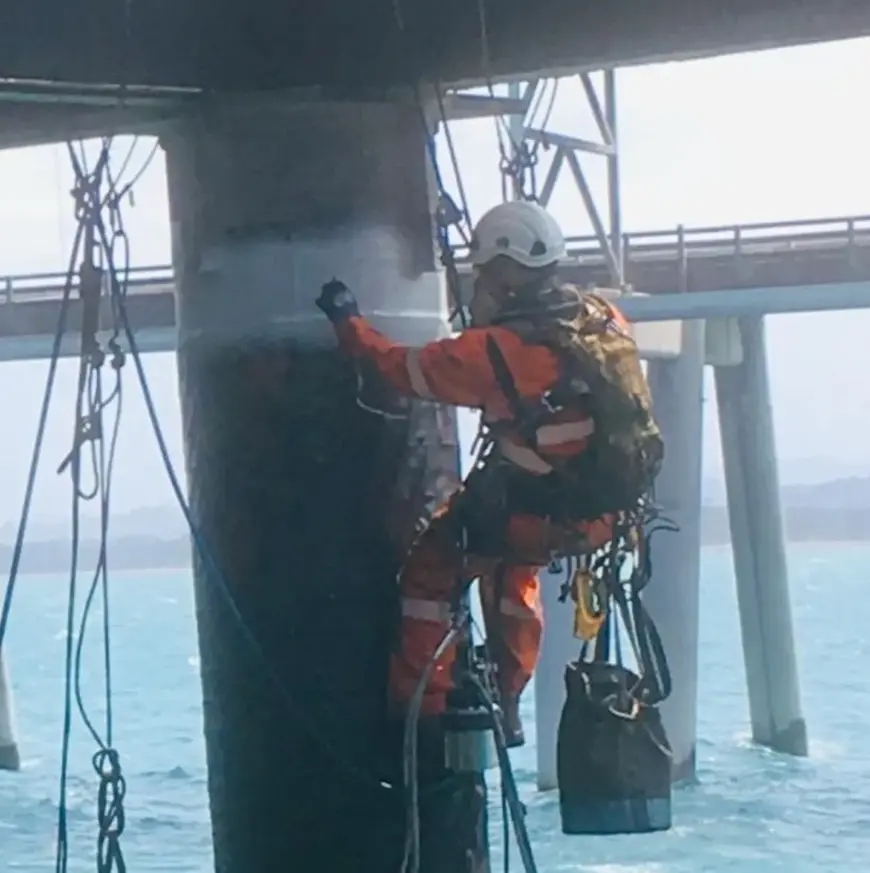
The idea is simple: a rope access coatings crew works alongside the inspection program. When a defect is found that falls within the agreed scope, it is prepared and coated there and then, instead of being written up for later.
A small patch of failed coating lets moisture and oxygen reach the steel, and in coastal and industrial environments corrosion can creep under the surrounding coating. The longer a defect is left, the more preparation and coating it needs, and on structural members a simple touch-up can grow into a much larger repair. Fixing defects early keeps each repair small and keeps the asset in service.
Every defect fixed on the spot is one less item to report, one less work pack to write, one less job to schedule and one less mobilisation of a crew and access equipment. On a large site with thousands of small defects, the saving in paperwork and access can be substantial.
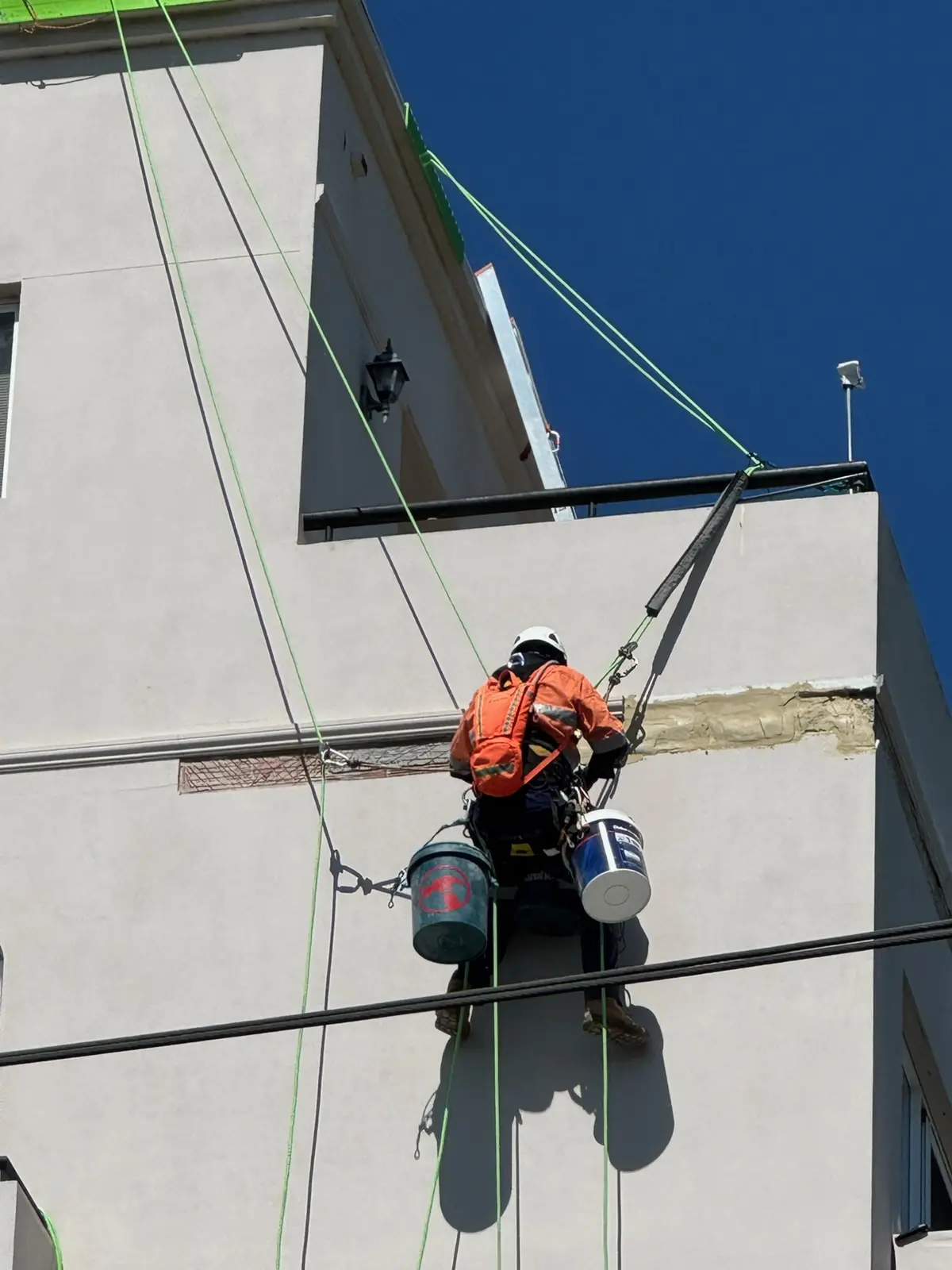
Coating defects are spread all over a site: on tank walls, pipe racks, silos, conveyors and structural steel, and many of them are at height. Scaffolding each one is slow and expensive, and an elevated work platform cannot always reach. A rope access technician can reach most of these areas from above, prepare the surface, apply the coating and move on to the next defect.
Fixing defects quickly only helps if the repair lasts. Each repair still needs the right surface preparation, whether that is water blasting, garnet blasting or mechanical rust removal, and the coating system specified for that asset. In Australia, AS 2312.1 is the guide used for selecting paint systems to protect structural steel against atmospheric corrosion, and the asset owner or paint manufacturer sets the system for each job. Repairs can be recorded against the inspection findings, so the asset owner still has a full record.
Inspect and repair suits sites with a steady flow of small to medium coating defects: mine sites and processing plants, water and wastewater facilities, ports, jetties and shiploaders, and pipelines. Larger areas of coating breakdown may still need planning as a separate maintenance coating project, and we can quote those too.
The same approach helps on new plant built from prefabricated modules. Modules are often coated before they arrive, but the field welds that join them, and any damage from transport and installation, still need coating on site. A rope access crew can work through those areas as they are signed off.
Inspect and repair works best when the rules are clear before work starts. That usually means agreeing which defect types and sizes can be repaired on the spot, which coating systems and surface preparation methods are approved for each asset, how repairs will be recorded and signed off, and which defects must still go through the normal work pack process. With that scope agreed, the crew can work quickly without stepping outside what the site has approved.
Industrial sites have their own permits, isolations, inductions and safety rules, and coating repairs often happen near operating plant. A rope access crew working alongside inspectors has to fit into those systems, work within the site’s permits and keep the area below controlled. Rope access suits this well, because it needs little equipment on the ground and can set up and pack down quickly.
Up2 Rope Access provides rope access protective coatings and mining and industrial rope access across Western Australia. If your site runs an inspection program, talk to us about repairing defects as they are found.

Years of Experience
Quality Workmanship
Crew, Whole Job
Google Rated
An approach where coating defects found during an inspection are repaired straight away by a crew working alongside the inspectors, instead of being reported and scheduled for a later repair.
Small areas of rust, damaged coating, uncoated weld joints and corrosion around fittings and supports are typical. Larger areas of coating breakdown are usually better planned as a separate project.
Defects are often high up and spread across a site. Rope access reaches them without scaffolding each one, so a crew can move quickly from one repair to the next.
Depending on the surface and the site, we use water blasting, garnet blasting or mechanical rust removal, then apply the coating system specified for the asset.
No. It deals with small defects early so they do not grow. Major coating breakdown still needs a planned maintenance coating job.
Yes. We are based in Perth and work on industrial sites across Western Australia.